
WHITE PAPER
Loop calibration or instrument calibration? A practical guide to choosing the right approach
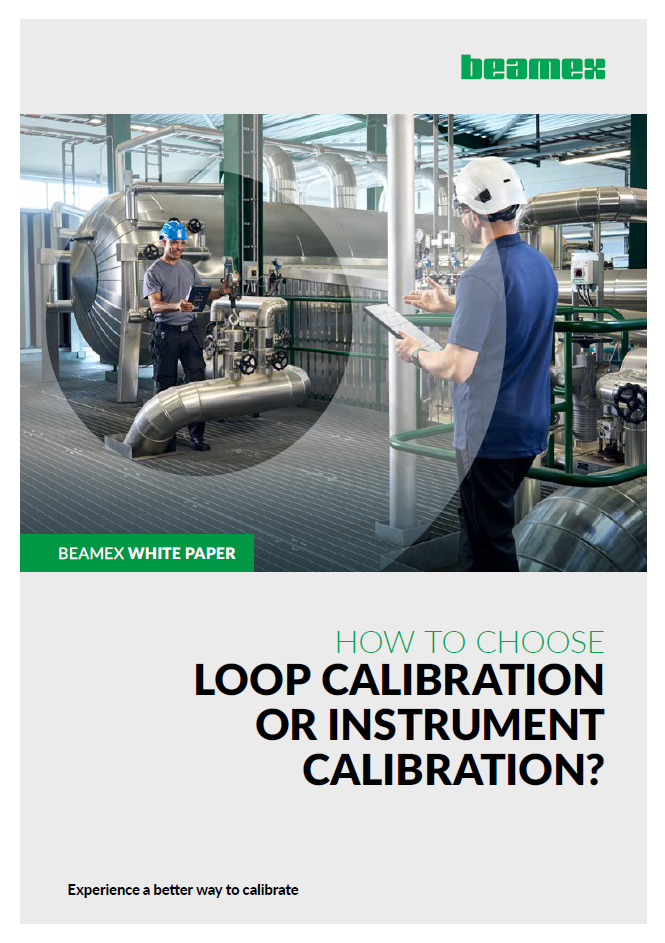
Calibration teams often face a practical question: should you calibrate the full measurement loop end to end, or focus on individual instruments? Both methods are widely used in industry, but they serve different purposes.
This white paper explains the differences between loop calibration and instrument calibration from a practical, real-world perspective. You’ll learn when each approach makes sense, how partial loop calibration fits in, and how to build a smarter calibration strategy that balances efficiency, accuracy, and traceability.
What you will learn
- What a measurement loop really means in practical calibration work
- The key differences between loop calibration and instrument calibration
- When loop calibration is efficient and when instrument calibration is necessary
- Hidden risks such as error compensation between instruments
- How risk-based calibration planning can improve efficiency
- Real-world considerations such as filtering, display resolution, and synchronization
- How modern digital loops influence calibration strategy
Who should read this
- Calibration technicians and engineers
- Maintenance and reliability teams
- Instrumentation and automation specialists
- Quality and compliance professionals
- Anyone responsible for calibration planning or strategy
Why download this white paper
Choosing the right calibration approach is not about following one fixed method. It is about understanding the purpose of the measurement, required accuracy, and documentation needs.
Inside the guide, you’ll find practical explanations and real-world examples that help you:
- Reduce unnecessary calibration work
- Improve confidence in measurement results
- Support compliance and traceability requirements
- Make smarter decisions about loop versus instrument calibration
Download the white paper
Fill in the form to get access to the white paper.